
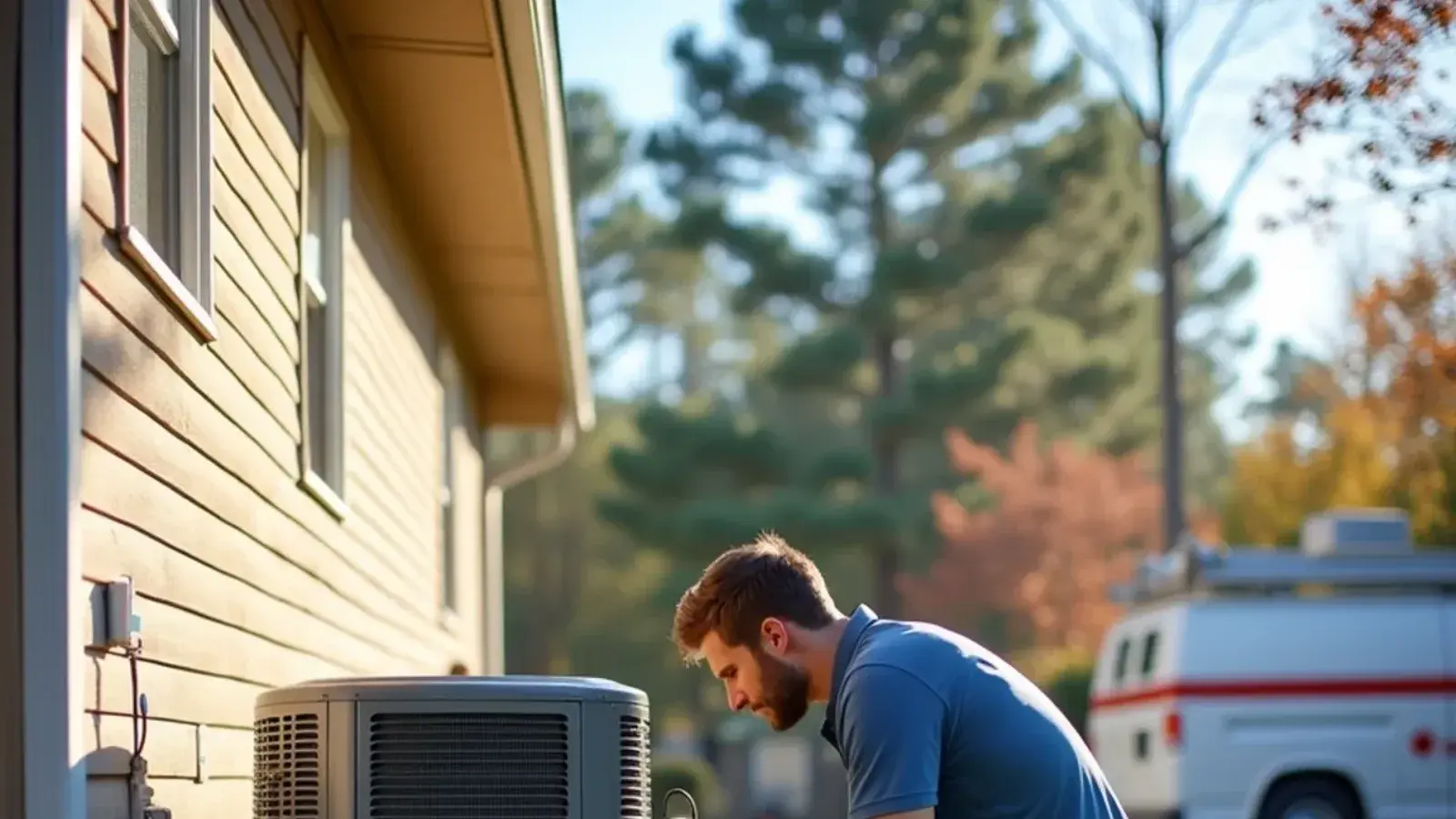
When the house will not cool, will not heat, or the system starts making noises it never made before, you want a straight diagnosis and a fair choice of fixes. That is how HVAC repair in Lexington, SC works with us. We troubleshoot central air conditioners, heat pumps, gas and propane furnaces and ductless mini-splits, explain what failed and why, and lay out the options. Customers often mention the lack of upselling, and we intend to keep it that way.
Signs your system needs a service call
Some problems are obvious. Others creep up slowly in the form of rising power bills or one room that never feels right.
| What you notice | Common causes | How soon to call |
|---|---|---|
| Air from vents is warm in cooling mode | Failed capacitor, contactor or fan motor, low refrigerant | Today in hot weather |
| System turns on and off every few minutes | Oversized equipment, dirty coil, thermostat placement, low charge | Soon |
| Frost or ice forming on refrigerant piping | Starved airflow from a dirty filter or slow blower, or a leak | Turn off, call today |
| Furnace clicks but never lights | Igniter, flame sensor, pressure switch, venting | Today in cold weather |
| Grinding, squealing or banging | Motor bearings, loose blower wheel, debris in fan | Soon, before it spreads |
| Burning or electrical smell | Overheated wiring or motor | Turn off now, call |
| Bills creeping up, rooms uneven | Leaky ducts, dirty coils, aging components | Schedule a visit |
| Mini-split blinking, not cooling | Sensor fault, clogged filters, low refrigerant | Soon |
If anything smells like gas or burning, or a breaker trips repeatedly, treat it as urgent; our emergency HVAC service answers those calls 24/7.
Why heating and cooling systems break down here
Lexington's climate is hard on equipment. Long, humid summers mean air conditioners run far more hours than they would farther north, and those hours wear out capacitors, contactors and fan motors. Spring pine pollen packs filters and outdoor coils, forcing the system to work harder for the same comfort. Summer thunderstorms bring power surges that kill control boards.
Housing adds its own wear. Air handlers in hot attics bake all summer. Ducts in crawlspaces sweat and sag. In subdivisions like those around Red Bank, many systems went in while 13 SEER was the federal minimum and are now reaching the age where repairs start to add up.
What an HVAC repair visit covers
A repair visit is built around one question: what actually failed, and what is the most sensible way to fix it? We work on the heating and cooling equipment found in Midlands homes and small businesses, whatever the brand and whoever installed it, and the visit runs from the thermostat on the wall to the condenser in the yard. Most calls end with the system running the same day; some need a part ordered from a supply house. Typical work includes:
- Electrical repairs: capacitors, contactors, relays, fuses, transformers and thermostat wiring
- Motor work on blowers, condenser fans and furnace inducers
- Refrigerant leak searches, coil repairs and recharges
- Ignition, flame-sensing and venting repairs on gas and propane furnaces
- Heat pump defrost controls, reversing valves and backup heat strips
- Mini-split sensor, board and drain faults
Ducts, drains and airflow get checked along the way, because a repair that ignores the cause tends to come back.
How do we troubleshoot an HVAC problem?
A good diagnosis follows the system in order instead of jumping to the most expensive part.
1. Start with what you saw
When did it start, what does it sound or smell like, has it happened before, has anyone worked on it recently? Those answers narrow the search fast.
2. Controls and power
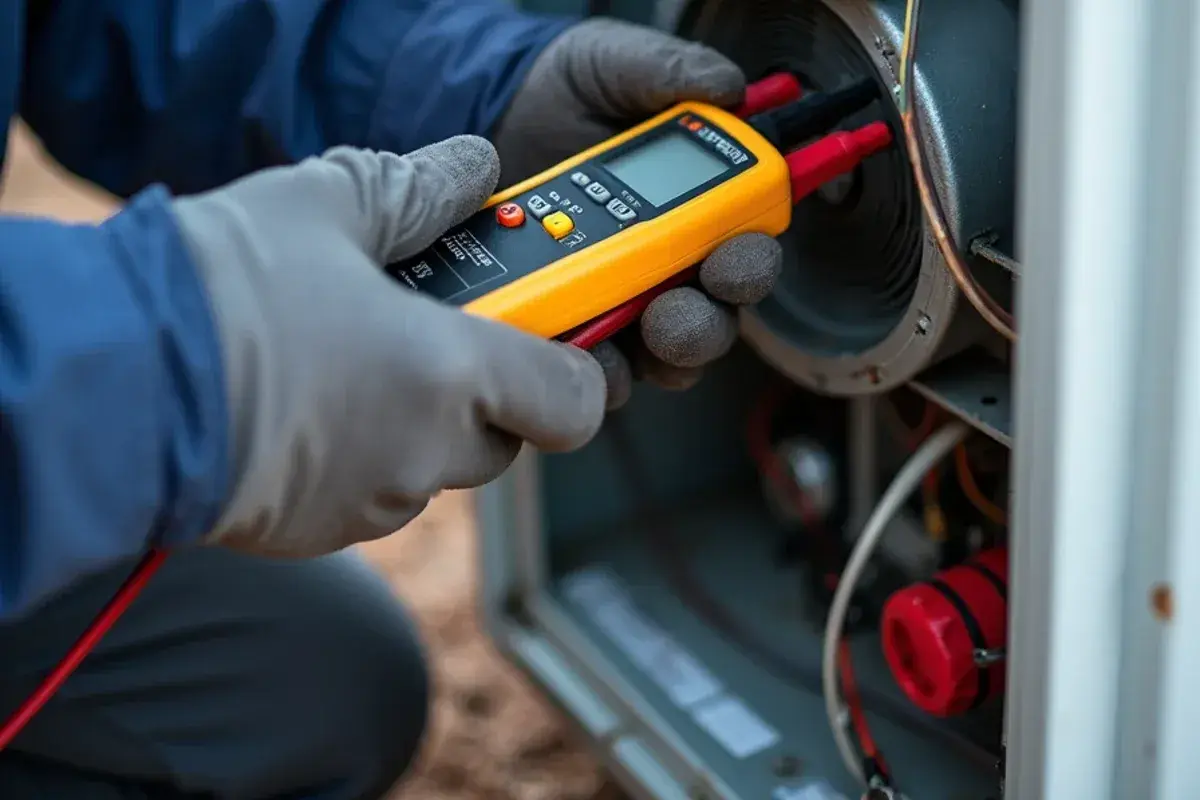
Thermostat settings and wiring, breakers, the outdoor disconnect, fuses, the transformer, contactor and capacitors. Many no-cool and no-heat calls end here.
3. Airflow
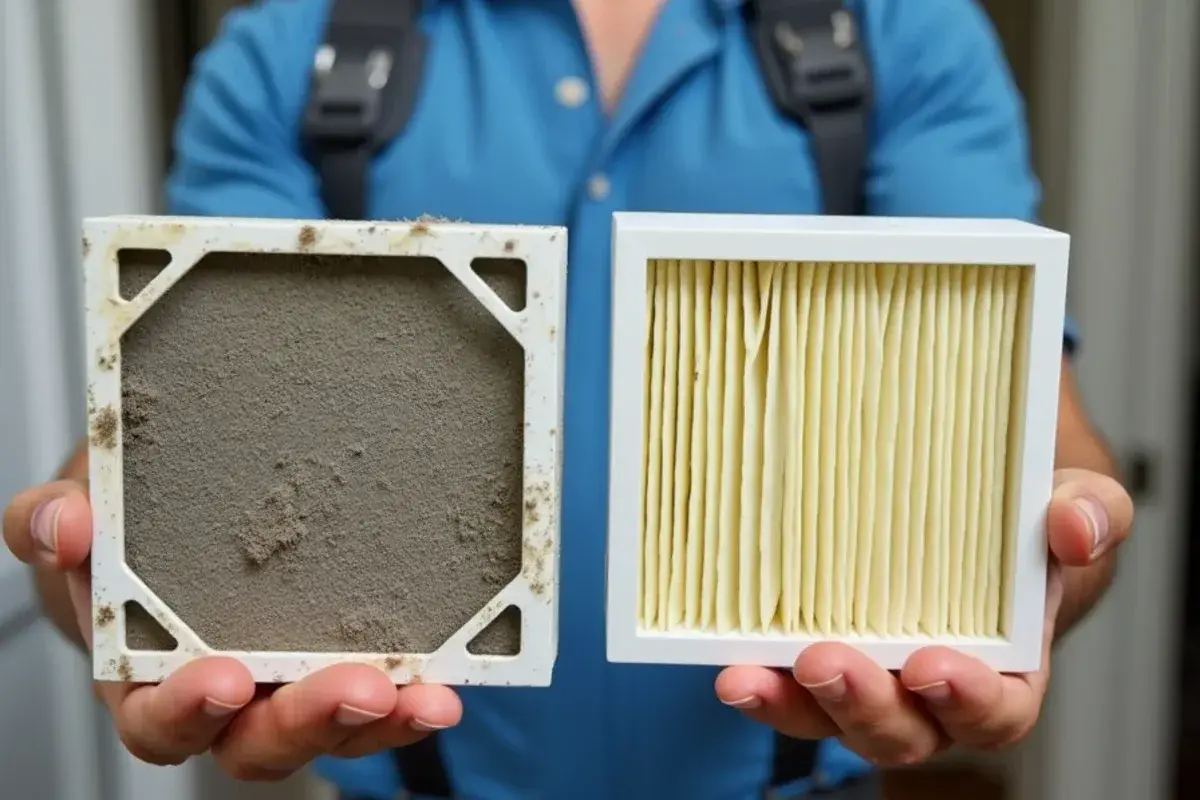
Filter, blower motor and wheel, indoor coil, return and supply ducts. Low airflow causes frozen coils in summer and overheating furnaces in winter.
4. Refrigerant circuit
On air conditioners and heat pumps, pressures and temperatures show whether the charge is right. A low reading leads to a leak search rather than a top-off that would just leak out again. All refrigerant work follows EPA Section 608 handling requirements.
5. Combustion and safety on gas equipment
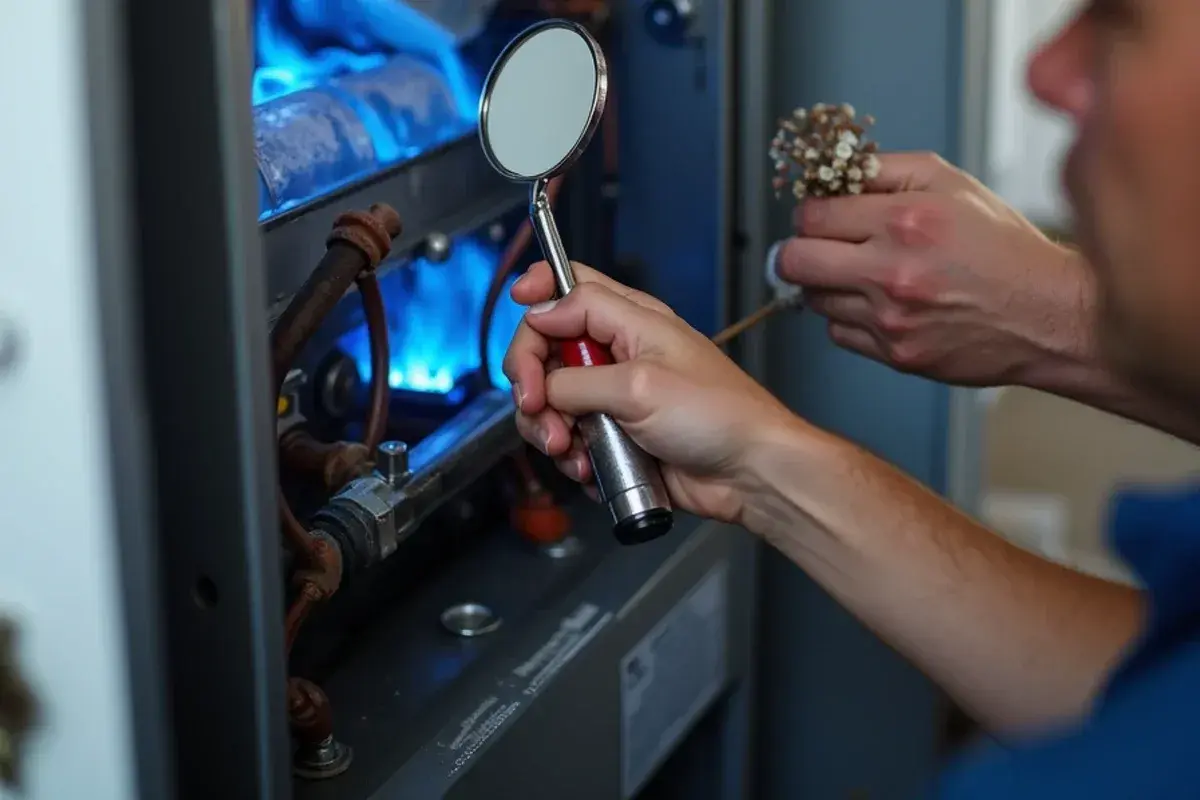
Ignition sequence, flame sensing, the inducer and pressure switch, venting, and a check for signs of heat exchanger problems or carbon monoxide.
6. Confirm the fix
After the repair, the system runs through a full cycle while readings are rechecked, so you know the problem is solved rather than just quiet.
Repair options and their trade-offs
Most problems can be fixed in one of three ways.
- Replace the failed part. A capacitor, contactor, igniter or sensor. Fast, inexpensive, and often the right call on a system with years left.
- Replace a major component. A blower motor, an evaporator coil or a compressor. Worth it on younger equipment, harder to justify on an older system with other worn parts.
- Replace the system. Makes sense when the equipment is old, runs on R-22, has a failing compressor or has needed repeated repairs. Our HVAC installation and replacement page covers that path.
For more on specific equipment, see AC repair, furnace repair, heat pump repair and mini-split repair.
Who may work on your system, and under what rules
HVAC contractors in this state hold licenses issued through SC LLR, and its online search shows whether a company's license is active before you let anyone open the equipment. We hold full licensing and insurance. Repairs on the refrigerant side are governed by EPA Section 608: refrigerant is recovered rather than released, and leaking systems should be fixed rather than refilled again and again. Most part-for-part repairs need no permit, but swapping a condenser, furnace or air handler counts as equipment replacement, which normally needs a permit and inspection from whichever jurisdiction covers the house, town or county.
What changes the cost of a repair
Repair prices are not posted here: two Lexington houses with warm air at the vents might need a small part or a compressor. The factors that move the bill:
- Which part failed and whether it is a common item or model-specific.
- Refrigerant. Leak search, repair and recharge add time, and R-22 costs more than current refrigerants.
- Access. Attic, crawlspace and rooftop equipment takes longer to reach and work on.
- Timing. After-hours visits carry an extra charge.
- Manufacturer warranty status. A covered part can lower the cost, though labor is usually separate.
- Diagnosis time. A dead capacitor is found in minutes; an intermittent fault that shows up only on the hottest afternoon may take a return visit with the system under load.
- Earlier fixes. Bypassed safety switches, mismatched parts or a past top-off without a leak repair have to be corrected before the real repair holds.
- Age and condition. On older equipment, a part that is hard to source or a second worn component can change the math toward replacement.
Preventing the next breakdown
Change filters on schedule, more often during pollen season. Keep shrubs and pine straw a couple of feet back from the outdoor unit. And book a professional check every spring and fall; our HVAC maintenance plans handle that with a spring and a fall visit, so worn parts get caught on a calm weekday instead of during a heat wave. That applies to homes in Oak Grove, about ten minutes from our base, and everywhere else we serve in Lexington County.
Why Lexington homeowners trust us with repairs
Reviews of our work keep returning to two things: honest advice with no upselling, and problems other companies missed, including a refrigerant leak found after another contractor had overlooked it. That comes from testing before replacing anything. The company is owner-operated, holds NATE certification, brings more than a decade of HVAC work and has a 5.0 Google rating from 29 reviews. You get a call before the technician arrives and a clean work area after. When repair stops making sense, we quote Bryant equipment as an authorized dealer at no charge, and veterans get 15% off, as do first responders, police officers and health care workers.
Where we do hvac repair around Lexington
A few of the communities we serve, and what this service usually looks like there.
- HVAC Repair in Oak Grove, SC
About ten minutes away; 30- to 40-year-old duct runs behind many comfort complaints.
- HVAC Repair in Red Bank, SC
13 SEER-era systems where repeat repairs raise the repair-or-replace question.
- HVAC Repair in West Columbia, SC
Older homes near the river where furnaces and condensers have seen decades of use.
- HVAC Repair in Seven Oaks, SC
Sweating crawlspace ducts and tired blowers in 1970s-80s split-levels.
- HVAC Repair in Irmo, SC
First- and second-generation heat pumps with worn reversing valves and defrost boards.
- HVAC Repair in Cayce, SC
Surge-damaged control boards and contactors after riverside thunderstorms.
- HVAC Repair in South Congaree, SC
Modest 1960s-80s homes where a careful repair often beats replacement.
- HVAC Repair in Lexington County
Countywide repair calls, from attic air handlers to manufactured-home packaged units.
Google reviews that mention work like hvac repair
5.0 out of 5 from 29 Google reviews
“My A/C fan was on, but was not cooling. That was on a Friday night. I called the technician that night which was late at 8.45 pm. He said that he could get to me around 2 to 3 pm Saturday., I said I wanted to find someone tonight , but if I can’t find anyone could I call you back and he said yes. We used fans that night, but I call the Technician back at 9am the next morning.He was here by 10:30 am. He was very professional and explained everything that asked. He made sure to give me maintenance advice and a federal worker discount. I’m very happy and will call Puzzled Comfort Solutions again when needed.”
- Responsiveness
- Punctuality
- Quality
- Professionalism
- Value
Services: A/C system repair
Response from the owner: Thank you for your review and thank you for the opportunity to be able make your home comfortable again.
“After dealing with a leak in my ac system that another company was unable to find I had the guys at Puzzled Comfort come out and they found the leak in less than a half hour. Decided to have a new system installed and they gave me multiple options with a thorough breakdown on each options pros and cons. They did a great job installing the new system and were great to deal with. Highly recommended.”
- Responsiveness
- Punctuality
- Quality
- Professionalism
- Value
Services: Install AC, Heating system installation
“We were finalizing repairs on our new house including some HVAC system issues found during our home inspections. Puzzled Comfort was responsive and professional in getting all HVAC issues repaired within a week of moving in. I appreciate all the work that got put in and how fast it got done. Strong recommend and I will be using them for all of my HVAC needs in the future.”
- Punctuality
- Quality
- Professionalism
- Value
Services: HVAC system maintenance
What should you know before booking an HVAC repair?
What does an HVAC service call include?
A technician comes out, hears what you have noticed, and tests the system from the thermostat to the outdoor unit: power and controls, airflow and filter, refrigerant pressures on cooling and heat pump systems, and ignition and venting on gas furnaces. You get the cause in plain language and the repair options with prices. Ask about the service-call charge when booking; the repair itself only goes ahead once you approve it.
Do you repair systems other companies installed?
Yes. Who installed the system makes no difference to how we diagnose or repair it. A fresh set of eyes can also help when a problem keeps coming back after earlier visits; our reviews include a refrigerant leak found after another company had missed it. If the equipment is still under a manufacturer warranty, bring any paperwork you have so covered parts can be handled correctly.
Will you tell me if a repair isn't worth it?
Yes. If the equipment is old enough that more repairs are coming, runs on R-22, has a failing compressor or has needed repair after repair, you will hear that plainly along with what a fix would buy you. Plenty of times the honest answer is that a modest repair makes sense. Either way you get the trade-offs, not a sales pitch, and the choice stays with you.
Do you carry common parts on the truck?
Common wear items such as capacitors, contactors, fuses and filters are often replaced on the first visit. Parts that are specific to one make or model, such as control boards, blower motors, igniters for certain furnaces, coils and compressors, usually come from a supply house. When something must be ordered, you will hear the expected wait and whether the system can run safely in the meantime.
Still have a question about hvac repair? Ask us directly.
Call (213) 423-7827