
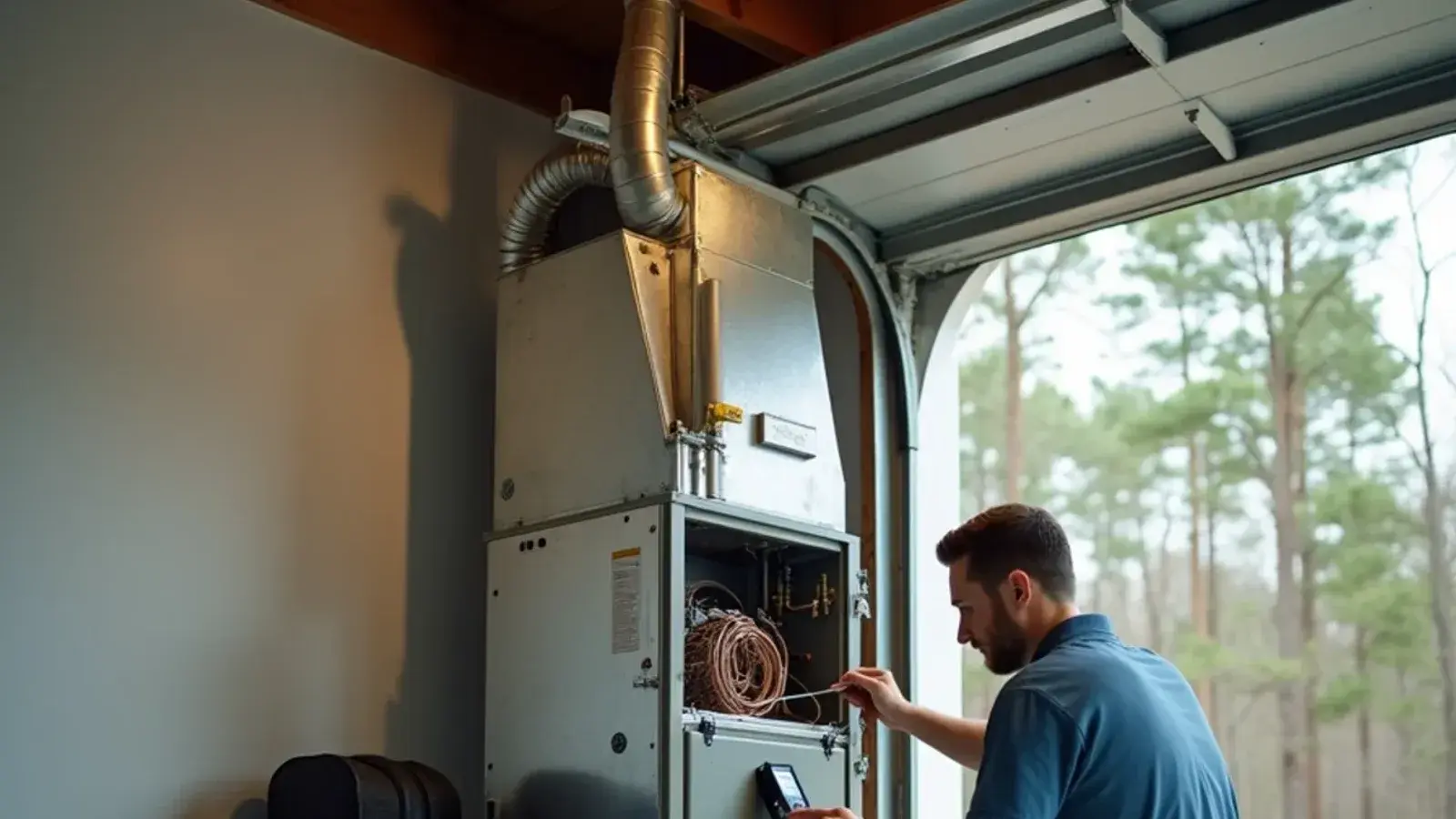
Refrigerant leak repair in Lexington, SC starts with one fact many homeowners never hear: an air conditioner doesn't use up its refrigerant. The same charge circulates for the life of the system. If yours keeps coming up low, refrigerant is escaping somewhere, and adding more only buys a few weeks or months.
We find the leak first. Sometimes it's a loose valve core that takes minutes to fix. Sometimes it's a pinhole deep inside the indoor coil that someone else missed. Either way, you see what we found and get honest options before we recharge anything.
Signs your AC is losing refrigerant
Low refrigerant tends to show up gradually, and it's easy to mistake for an old system "just getting tired."
| What you notice | What it suggests |
|---|---|
| A previous technician topped off the refrigerant, and now it's low again | An active leak that was never found |
| Cool air at first, then warmer air on long afternoon runs | Charge dropping to the point the coil can't absorb enough heat |
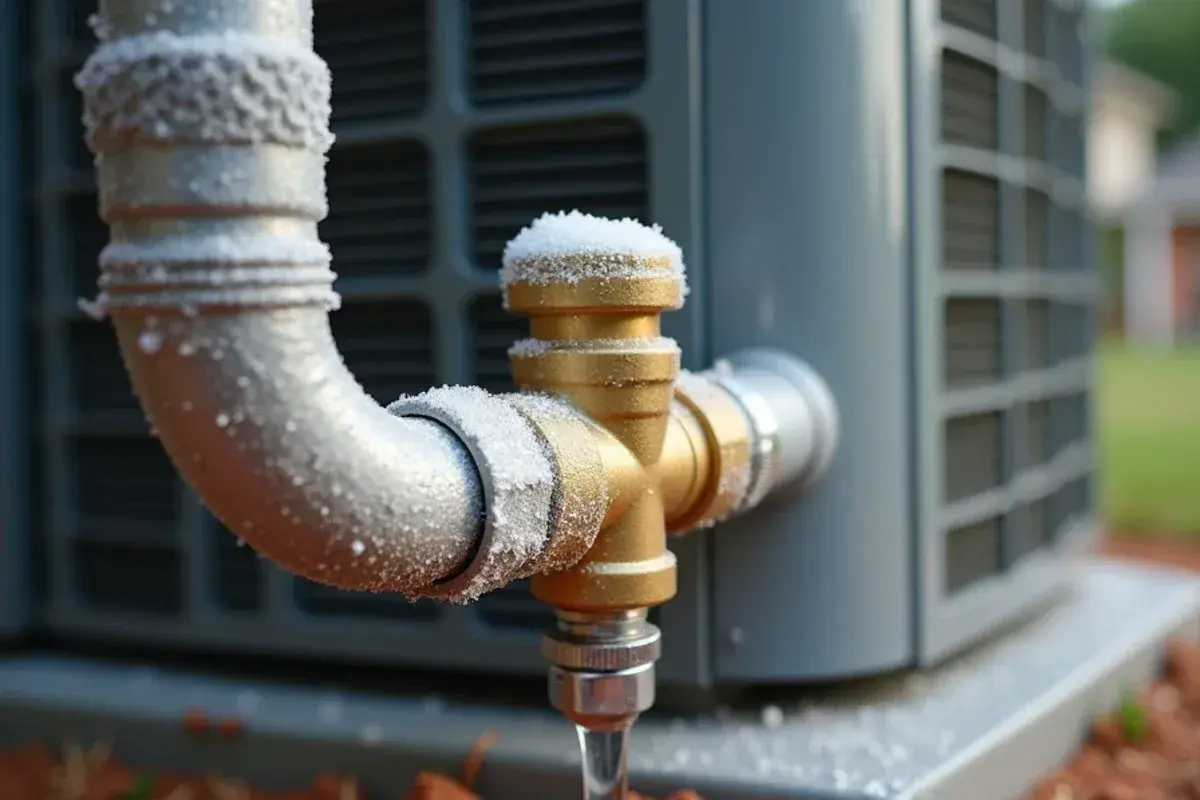
| Ice on the copper line outside or on the indoor coil | Low pressure in the coil dropping its temperature below freezing |
| A hissing or faint bubbling sound at the indoor unit | Refrigerant escaping from the coil or a joint |
| Oily residue at a fitting, valve or coil bend | Compressor oil carried out with escaping refrigerant |
| Power bills climbing while comfort drops | The system running longer to move the same heat |
A frozen evaporator coil has two main causes: low charge or poor airflow from a dirty filter or weak blower. We check airflow first, because adding refrigerant to a system with an airflow problem makes things worse.
What leak and coil work covers
This service picks up where a routine repair call stops: the system is low, and someone needs to find out why. It covers the indoor evaporator coil, the outdoor condenser coil, the copper line set between them and every valve and joint along the way. The goal is a sealed system holding its factory charge, not a refill that leaks out by August.
- Confirming the system is truly undercharged, not starved for airflow
- Locating the leak with electronic detection, bubble solution and nitrogen pressure tests
- Repairing valve cores, brazed joints and rubbed lines in place
- Replacing evaporator coils matched to your refrigerant and outdoor unit
- Recovering, evacuating and recharging the system to specification
- Advising on replacement when the coil or the refrigerant makes repair a poor deal
Where leaks start in Midlands systems
Most leaks we trace fall into a few groups.
- The indoor coil. Copper evaporator coils can develop tiny pinholes from formicary corrosion, a slow chemical attack driven by household vapors from cleaners, adhesives and building materials. These leaks are small, slow and hard to find.
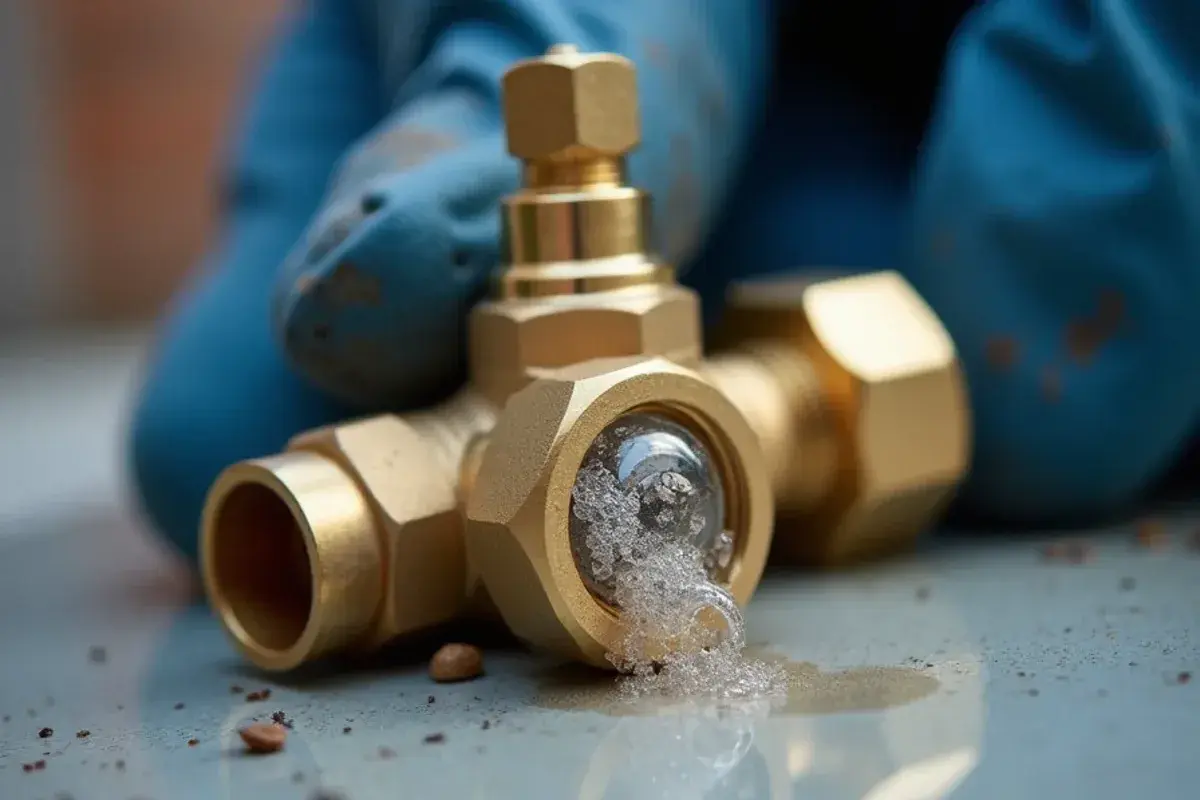
- Valve cores and caps. The Schrader valves on the service ports work like a tire valve. A worn core or a missing cap can seep refrigerant.
- Rubbing copper. Where a line vibrates against a cabinet edge or another tube, it can wear through over the years.
- Joints. Brazed connections can crack, particularly where a line set was stressed during installation.
- The outdoor coil. String trimmers, mower debris and pets can puncture condenser fins and tubing.
Attic air handlers add a twist. The coil sits in a space that can run well past 120 degrees in July, then sweats heavily when the system cools. Access is tight, so leaks there need patience to trace. Our air handler service covers the rest of that indoor cabinet.
How do we find and fix the leak?
Detection is a process of elimination, not a single test. The whole job runs in six steps:
- Confirm the undercharge with gauges, superheat and subcooling.
- Search the likely spots with an electronic detector and bubble solution.
- Pressure-test with nitrogen when the leak hides.
- Show you the leak and price the repair, coil or system options below.
- Repair, then hold nitrogen pressure again to prove the fix.
- Evacuate and recharge with a deep vacuum, refrigerant weighed in and readings checked under load.
The first three steps take the most skill:
Confirm the problem
Gauges and line temperatures tell us whether the system is truly undercharged. Superheat and subcooling readings separate a leak from an airflow or metering problem.
Search the likely spots
We look for oil staining, then run an electronic leak detector slowly along the coil, line set, valves and joints. Suspect spots get bubble solution, which foams where gas escapes.
Pressure-test when it hides
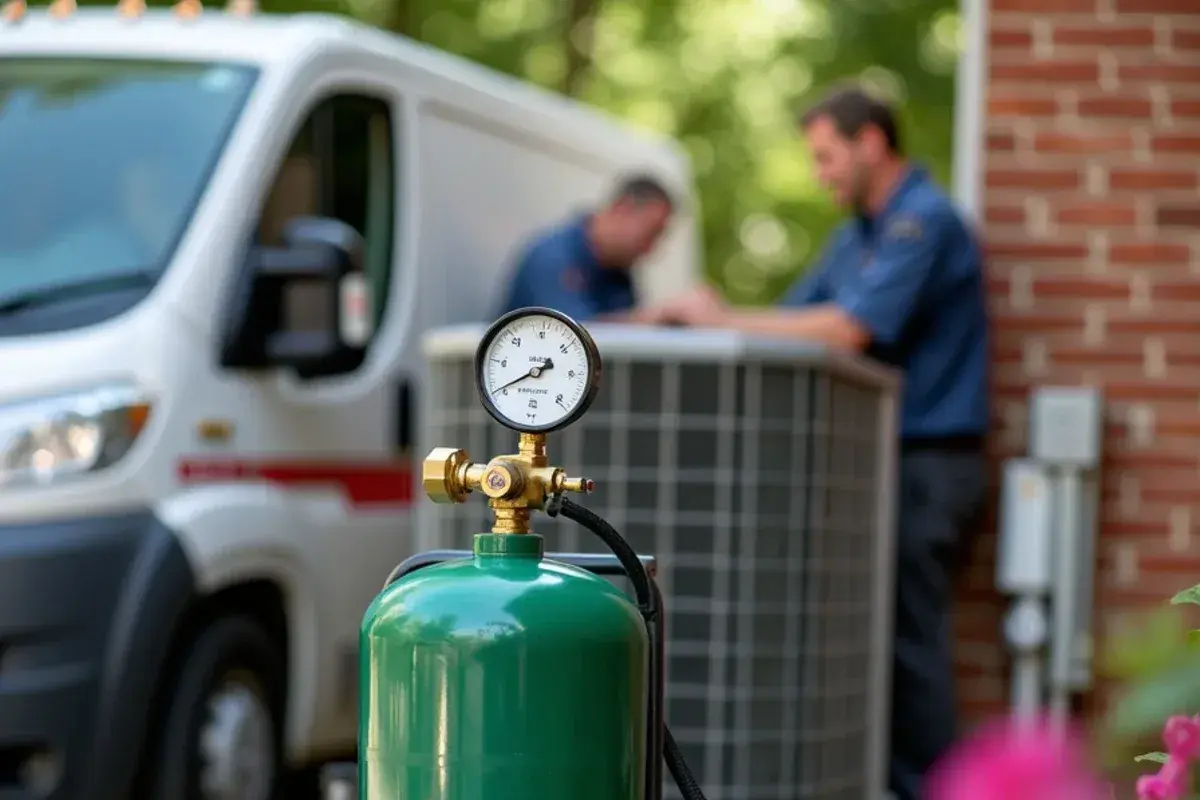
If the leak doesn't show itself, we recover the refrigerant, isolate sections of the system, and pressurize them with dry nitrogen. A gauge that drops over time points to the section with the leak. This is how slow coil leaks finally get pinned down.
Repair the leak, replace the coil, or replace the system
Once we know where the leak is, the choices usually come down to three.
Repair in place
Valve cores, accessible joints and rubbed lines can often be repaired directly by replacing the core or brazing the joint. This is the least expensive outcome and common on newer systems.
Replace the coil
A leaking evaporator coil is rarely worth patching. A replacement coil has to match your system's refrigerant and be compatible with the outdoor unit. If the equipment is still within the manufacturer's parts warranty, the coil itself may be covered, while labor and refrigerant are billed. A damaged outdoor coil usually means replacing the outdoor unit.
Replace the system
For R-22 equipment or a system past about 12 to 15 years, the money spent on a coil and refrigerant often makes more sense going toward a new system through our AC installation and replacement service. Existing R-410A systems can still be serviced and repaired with R-410A; brand-new systems now use A2L refrigerants such as R-454B and R-32.
After any repair, the system is pressure-tested, pulled into a deep vacuum to remove moisture, charged to the manufacturer's specification by weight, and checked under load.
Refrigerant rules and what affects the cost
EPA Section 608 prohibits knowingly venting refrigerant into the air and requires anyone who opens a refrigerant circuit to be certified. Refrigerant removed from your system is recovered, not released. R-22 production ended in 2020, so that refrigerant now comes only from reclaimed stock. At the state level, LLR licenses HVAC contractors and lists them in a public lookup; we are fully licensed and insured. A coil swap normally needs no permit, but replacing the condenser or the whole system usually does.
What moves the price of leak work
A leak search is open-ended, so here are the variables:
-
Where the leak is and how hard it is to reach, especially in an attic or crawlspace
-
How long it takes to locate, since a slow coil leak takes more testing than a cracked valve
-
The type and amount of refrigerant your system needs, with R-22 the most costly
-
Whether a coil is needed and how quickly a matching one can be sourced
-
Manufacturer warranty coverage on the part
-
Whether the outdoor unit or line set is affected as well as the coil
You get the price for the repair before we start. To spot a slipping charge early next year, a spring AC tune-up checks pressures every visit.
Why homeowners bring us the leak someone else missed
Finding a refrigerant leak that another company had overlooked is one of the things our reviewers single out. That comes from method, not luck: confirming the charge before blaming it, then testing section by section until the gauge stops moving. The owner still does this work himself, backed by more than ten years in HVAC and NATE certification, and you see the bubbles or the falling needle before any money is spent. Our Google rating is 5.0 across 29 reviews. Coil and system replacements get free estimates and can be financed.
Where we do ac coil & refrigerant leak repair around Lexington
A few of the communities we serve, and what this service usually looks like there.
- AC Coil & Refrigerant Leak Repair in Lexington County
Countywide, most leak calls involve systems already topped off once or twice.
- AC Coil & Refrigerant Leak Repair in West Columbia, SC
Older closet coils in mid-century houses here are prime candidates for slow pinhole leaks.
- AC Coil & Refrigerant Leak Repair in Seven Oaks, SC
Many 1980s systems still run R-22, so a leak here starts the repair-or-replace conversation.
- AC Coil & Refrigerant Leak Repair in Red Bank, SC
Attic coils in post-2000 subdivisions bake in summer heat, and leaks there take patience to trace.
- AC Coil & Refrigerant Leak Repair in Irmo, SC
Aging heat pumps near the dam leak at reversing valves and joints as well as at the coil.
- AC Coil & Refrigerant Leak Repair in Oak Grove, SC
Trimmers and mower debris around slab-ranch condensers puncture outdoor coil tubing.
- AC Coil & Refrigerant Leak Repair in Cayce, SC
Units that sat in floodwater can corrode at fittings years later.
- AC Coil & Refrigerant Leak Repair in White Knoll, SC
Packaged units at manufactured homes get the same search, coil and all, in one outdoor cabinet.
- AC Coil & Refrigerant Leak Repair in South Congaree, SC
On modest older homes, a valve-core or joint repair often beats replacing anything major.
Google reviews that mention work like ac coil & refrigerant leak repair
5.0 out of 5 from 29 Google reviews
“Puzzled Comfort solutions came recommended by a family member a few years ago and Chong is now our go-to person for anything HVAC and electrical related. He has saved us several times during emergency situations. Not only is Chong knowledgeable, he is trustworthy, professional, fair and efficient. During the heat of Summer, Chong came for emergency services when my HVAC went out while my nephew who was an infant was staying at my home. He fixed our issue quickly and had things up and running in no time. Recently, on Labor Day, while out of town we had a leak from our light fixture coming from the HVAC/roof. This could have easily turned into an electrical fire/problem and put my pets and house sitter at risk. Chong came out and fixed the issue within an hour and made sure our home was safe until he could get out there. I highly recommend using him for any of his services and we will now be on schedule for a bi-annual checkup to prevent further issues from happening. I have referred Chong to several friends and businesses who have felt the same about his great work. Thank you again!”
- Responsiveness
- Punctuality
- Quality
- Professionalism
- Value
“After dealing with a leak in my ac system that another company was unable to find I had the guys at Puzzled Comfort come out and they found the leak in less than a half hour. Decided to have a new system installed and they gave me multiple options with a thorough breakdown on each options pros and cons. They did a great job installing the new system and were great to deal with. Highly recommended.”
- Responsiveness
- Punctuality
- Quality
- Professionalism
- Value
Services: Install AC, Heating system installation
“Chong is independently owned very knowledgeable and Professional. I would highly recommend him to anyone and everyone our heat went out and it was going down to 25 the next night he came and was so caring and understanding to our needs as the unit was 25 years old and needed to be totally replaced he called and got a new unit and replaced it the next morning I am so gratefull to have found a honest and trustworthy person and very fair prices he is defintley the right person for any work you may need done and it will be done right!!!! Thanks Chong so much for the personable best care ever!!! Sincerely, Patti”
Services: Ductless heating & A/C services, Install AC, Heating system installation
What do homeowners ask about refrigerant leaks and coils?
How do you find a refrigerant leak in an AC system?
We start by confirming the system is actually undercharged rather than starved for airflow. Then we look for oil stains at joints and on the coil, sweep the coil, line set and valves with an electronic detector, and use bubble solution to pinpoint the spot. When a leak hides, we isolate sections and hold them under nitrogen pressure to see which one loses it.
Is it worth replacing an evaporator coil or the whole system?
On a system under roughly ten years old that runs on R-410A, a new coil is often the sensible choice, especially if the manufacturer's parts warranty still covers it. On an older system, or anything using R-22, a coil can cost enough that putting the money toward a new matched system makes more sense. We price both so you can compare.
Why shouldn't I just keep recharging refrigerant?
Because the refrigerant goes right back out. Each top-off costs money, the system runs undercharged between visits, and a low charge makes the compressor run hot, which can shorten its life. Many leaks also get bigger over time. Releasing refrigerant into the air is restricted under federal rules, and a repaired leak means you stop paying for the same refrigerant twice.
Can you still service older R-22 systems?
Yes. R-22 hasn't been produced in the United States since 2020, but reclaimed and stockpiled refrigerant can still be used to service existing systems. It is scarce and expensive, so for a small leak at a valve or fitting a repair can make sense, while a leaking coil on an R-22 system usually points to replacement. We will lay out both paths.
Will a leak sealant fix my AC instead of a repair?
Usually not, and it can make the next repair harder. Sealants circulate through the whole system, can clog metering devices and filter driers, and can contaminate the recovery equipment used when the system is opened later. Some component makers say sealant can void warranty coverage. A slow coil leak in a Midlands attic is better found and fixed or replaced, so the charge stays put.
Still have a question about ac coil & refrigerant leak repair? Ask us directly.
Call (213) 423-7827