
Repair your HVAC system when it is under about 10 years old, uses R-410A or a newer refrigerant and the failed part is minor, such as a capacitor, motor or igniter. Replace it when it is older, runs on leaking R-22, needs a compressor or coil, or has needed several major repairs recently.
Whether to repair or replace HVAC equipment rarely has a single right answer, but it almost always has a clear one once you look at the facts. In Lexington, systems run hard: long, humid cooling seasons, short winters with a few nights in the 20s, and heavy spring pollen that loads filters and coils. That workload shortens equipment life and raises the stakes on every repair decision. This guide walks through the factors a technician weighs, so you can make the call with confidence instead of under pressure.
Start with the age of the system
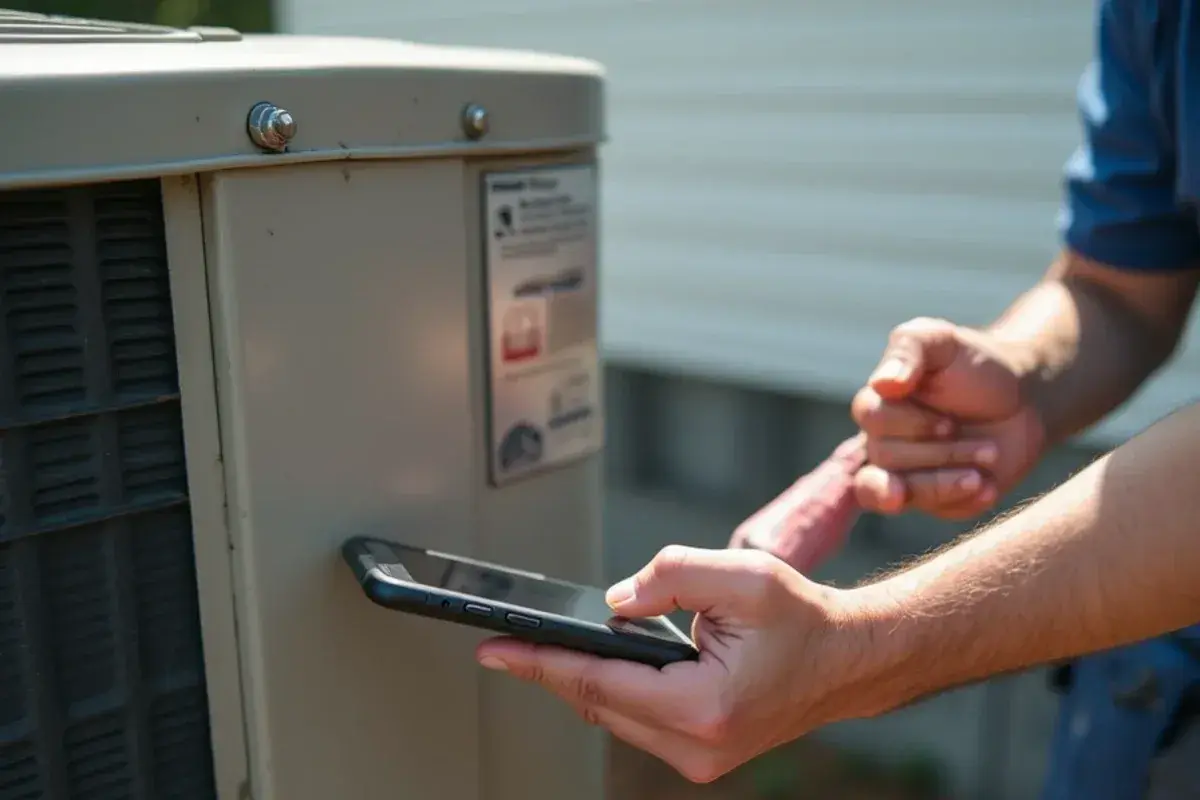
Age is the first clue. You'll find it on the data plate on the side of the outdoor unit or the indoor air handler; the serial number usually encodes the manufacture year, and a technician can decode it in seconds.
ENERGY STAR suggests it may be time to consider replacement when a heat pump or air conditioner is more than 10 years old, or a furnace or boiler more than 15. That's not a deadline. A well-maintained system past those marks can run fine for years. But it's a reasonable point to start asking whether the next big repair is worth it.
Many neighborhoods near Lexington have systems approaching or past that range. Ranch homes along the US-1 corridor in Oak Grove often still run on 1980s and 1990s ductwork, and subdivisions around Irmo have plenty of first- and second-generation heat pumps due for upgrades.
The 50 percent rule and repair cost
A common rule of thumb in the trade: if a repair costs more than half of what a replacement would, and the system is past the middle of its expected life, replacement usually makes more sense. It's a starting point, not a law. A modest repair on an older unit can still be the right move if the rest of the system is sound.
Some contractors use a variant that multiplies the system's age by the repair cost and compares the result to a fixed cutoff. Like the 50 percent rule, it ignores refrigerant type, comfort and the condition of everything that didn't break, so treat both as conversation starters.
Look at the total, too. One repair might be reasonable, but three in two years on the same unit is a pattern. Pull your invoices and add them up.
The refrigerant inside matters
R-22 systems. If your unit was installed before roughly 2010, it may use R-22. U.S. production and import of R-22 ended in 2020, leaving only reclaimed and stockpiled supply. Any repair that involves adding refrigerant gets harder to justify on an R-22 system, and leaks are common in older coils.
R-410A systems. Most systems installed from around 2010 until recently use R-410A. They can be serviced normally, though newer equipment has moved to lower-GWP A2L refrigerants such as R-454B and R-32 under the EPA's AIM Act rules starting in 2025.
Repair or replace: a side-by-side guide
| Situation | Repair usually makes sense | Replacement usually makes sense |
|---|---|---|
| System age | Under about 10 years for AC or heat pump | Past 10–15 years with heavy use |
| Failed part | Capacitor, contactor, fan motor, igniter, thermostat | Compressor, outdoor coil, indoor coil, cracked heat exchanger |
| Refrigerant | R-410A or newer | R-22 with a leak |
| Repair history | First significant repair | Several major repairs recently |
| Comfort | House stays cool, dry and even | Hot rooms, humidity problems, short cycling |
| Energy bills | Stable from year to year | Climbing without a clear reason |
| Noise and condition | Normal operation | Loud compressor, rust, damaged cabinet |
Comfort problems a repair won't fix
Sometimes a system that technically works still isn't doing its job. In humid summers, an oversized unit cools quickly and shuts off before it removes enough moisture, so the house feels clammy. An undersized unit runs nonstop and never quite catches up. Leaky or poorly designed ductwork leaves back bedrooms hot.
None of those problems is solved by replacing a part. If comfort has been poor for years, a replacement that includes a proper load calculation and duct evaluation is often the real fix.
Efficiency and what newer systems offer
Systems installed between 2006 and 2014 were often built to the 13 SEER federal minimum that applied then. The rating changed to SEER2 in 2023. In the DOE Southeast region, which includes South Carolina, a new split-system central AC below 45,000 Btu/h has a 14.3 SEER2 floor. Higher-efficiency units with variable-speed compressors and blowers also handle humidity better because they run longer at lower speeds.
Keep incentives in perspective. A 2026 replacement no longer earns the federal 25C credit, which the July 2025 One Big Beautiful Bill Act closed out at the end of 2025. Check current utility and manufacturer rebates, and talk with a tax professional about anything else.

How a technician tests both paths before you choose
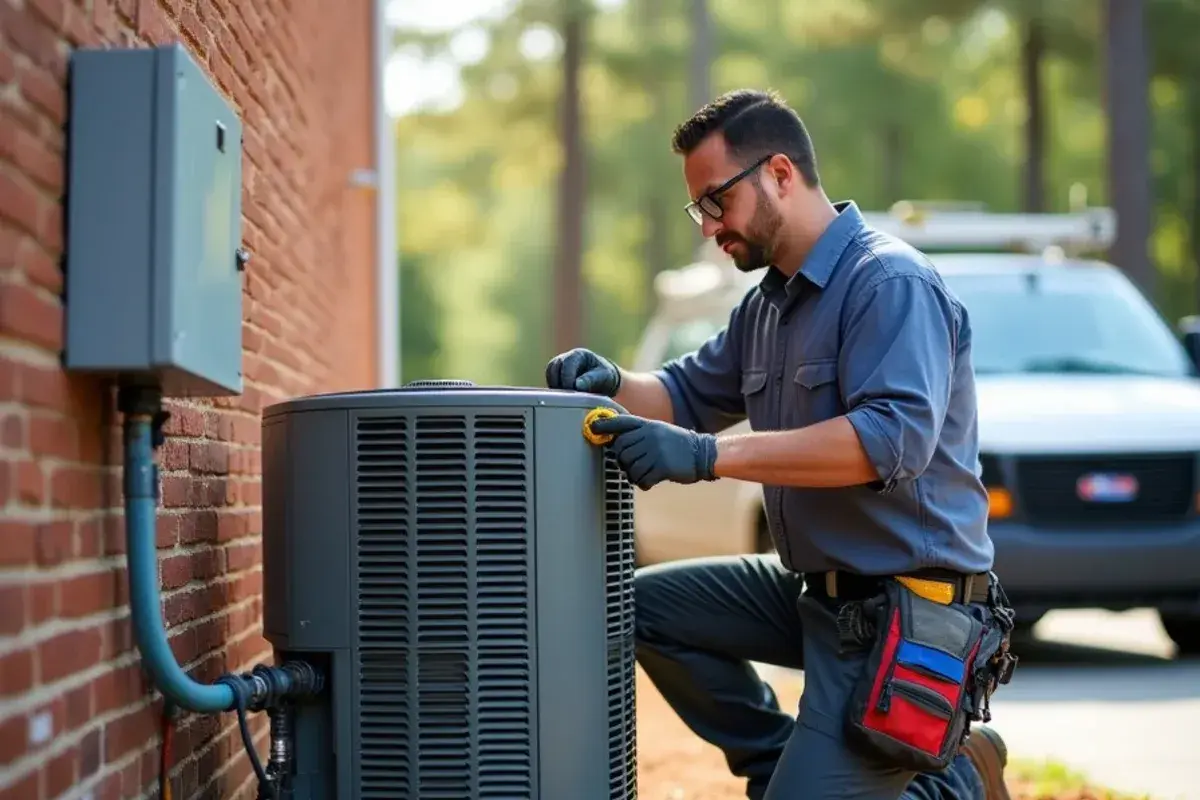
A fair repair-or-replace answer starts with readings, not a glance at the data plate. On a Lexington service call, this is what we check before recommending either path:
- Compressor health. Amp draw compared with the rating on the nameplate, plus winding resistance, separates a tired compressor from one that just lost its start capacitor.
- Refrigerant charge and leaks. Superheat and subcooling readings show whether the charge is right. If it's low, an electronic leak detector or bubble test hunts for the escape point. A recharge on its own just resets the clock on the same leak.
- Coil condition. Corrosion at the tube bends of an indoor coil often explains repeat leaks on older systems.
- Airflow and ductwork. A static pressure reading across the blower shows whether the ducts are choking the system. A new unit attached to undersized ducts inherits the same comfort problems.
- Furnace safety. On gas heat, the burners and heat exchanger get inspected for cracks and rust, and flue draft is checked.
One more factor has changed recently. Outdoor units built for the newer A2L refrigerants need an indoor coil rated for the same refrigerant, so replacing half of an aging split system is often no longer a clean option. When replacement wins, we can usually locate equipment and install it within days of the decision, and when repair wins, we'll tell you that just as plainly.
Questions to ask before you decide
- How old is the system and what refrigerant does it use?
- What exactly failed, and is the rest of the system in good condition?
- What would this repair cost compared with replacement?
- Have repairs or energy bills been climbing?
- Is the house actually comfortable, including humidity?
- Would replacement address duct or sizing problems?
Getting an honest answer
The decision should be yours, made with full information. When we're called for HVAC repair, we diagnose the failure, explain what the repair involves and tell you plainly if replacement deserves a look. When replacement is the better path, HVAC installation includes a load calculation, a look at the ductwork and permits through the local building department. Homeowners across Lexington County get both options with pros and cons, and no pressure either way.
The practical next step
Write down your system's age, refrigerant and recent repair costs before your next service call. If the unit is young and the failure is minor, repair it and keep maintaining it. If it's older, uses R-22 or has needed several major repairs, ask for a replacement quote alongside the repair estimate and compare them on paper. Making that call before a summer breakdown gives you time to choose the right system instead of the fastest one.
For a second opinion on a big repair quote, or a side-by-side look at repair and replacement, call (213) 423-7827. Estimates are free, financing is available on replacements, and you'll get the readings behind our recommendation.